Table of Contents
- Mother of the Groom Dress Etiquette: The Rules That Actually Matter
- When to Start Shopping for the Mother of the Groom Dress
- Mother of the Groom Outfit Colour Coordination
- Silhouettes, Fabrics, and Seasonal Choices
- Accessories, Footwear, and Finishing Touches
- Cultural, Religious, and Inclusive Considerations
- Conclusion
- Frequently Asked Questions
Last Updated: October 3, 2026
Mother of the Groom Dress Etiquette: The Rules That Actually Matter
Choosing what to wear as mother of the groom comes down to one principle: dress for the wedding you are attending, not the one you would have planned. The mother of the groom is a guest of honour, not a member of the wedding party, and her outfit should reflect that distinction. This guide explains the etiquette, the colours, the silhouettes, and the practical decisions that make the role easier.
The One Rule You Cannot Break
Never wear the same colour as the bride, and never wear white in any shade. That single rule sits at the heart of mother of the groom dress etiquette, and it holds regardless of venue, season, or budget.
From there, the rules loosen considerably. You are not expected to match the bridal party, and you should not try to. Your job is to look refined and comfortable beside the couple.
Ask the bride’s mother what she is wearing before you commit to anything. A quick message about colour and formality prevents the awkward moment where you both arrive in the same shade.
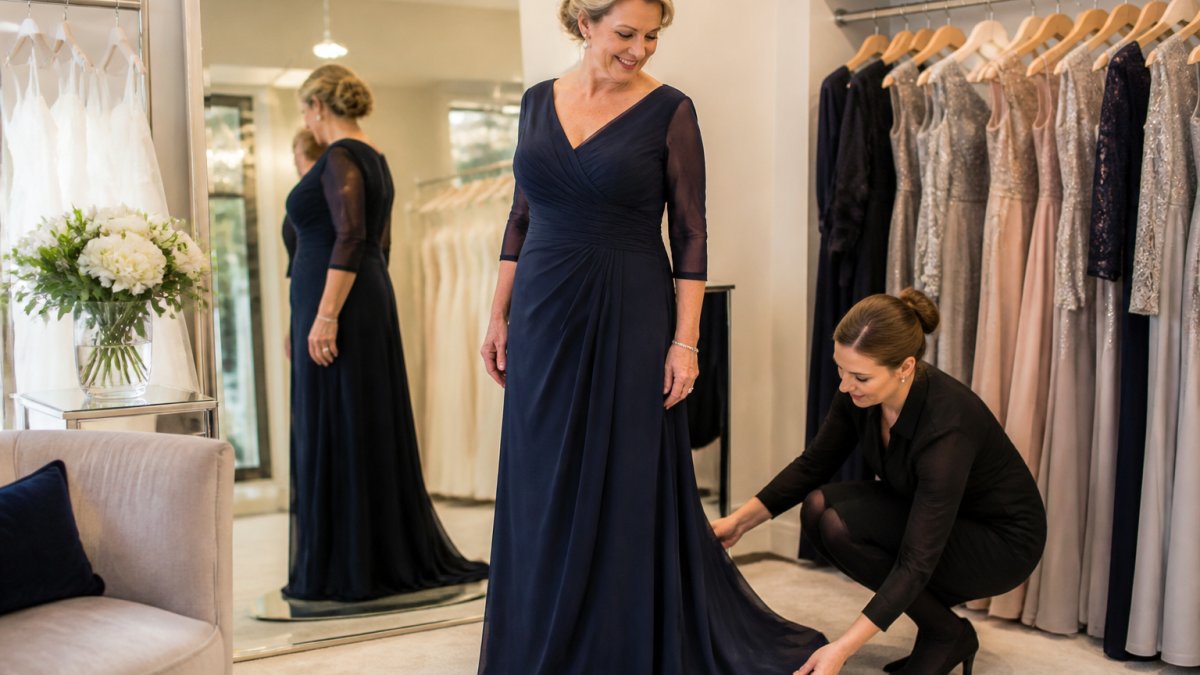
Coordinating With the Mother of the Bride
Treat the mother of the bride as your styling partner, not your competition. The two of you will appear in the same formal photographs, so your outfits should sit comfortably together in tone and formality. Coordinated does not mean identical.
Many families find that a shared colour family works best: one of you in a deeper shade, the other in a softer one. If the relationship allows it, a single conversation about length and sleeve coverage saves weeks of uncertainty.
When to Start Shopping for the Mother of the Groom Dress
Start shopping for the mother of the groom dress three to four months before the wedding, once the date, venue, and dress code are confirmed. That window leaves room for ordering, delivery, and at least two fittings without the pressure of a final-week panic.
A Realistic Timeline
- Six months out: Confirm the dress code and ask the bride about colour restrictions.
- Four to five months out: Begin appointments and try on silhouettes.
- Three months out: Order your chosen outfit, allowing for made-to-measure lead times.
- Six to eight weeks out: First fitting and any alterations.
- Two to three weeks out: Final fitting, then collect and press.
A common mistake is leaving the outfit until the last month, when popular sizes and fabrics are gone. Boutiques that offer a one-to-one appointment can usually work faster, but the calendar still works against you.
Mother of the Groom Outfit Colour Coordination
Mother of the groom outfit colour coordination starts with the wedding palette, not with your personal favourites. Ask the couple what colours the bridal party and décor will use, then choose a shade that sits alongside them rather than competing.
| Palette | Strong Choice | Avoid |
|---|---|---|
| Navy and blush | Deep navy, slate blue | Blush, pale pink |
| Sage and ivory | Dusty rose, plum | Sage, cream |
| Burgundy and gold | Emerald, teal | Burgundy, gold |
| Black tie | Jewel tones, silver | Bright white, neon |
Working With the Wedding Palette
Neutral tones and pastel shades flatter most complexions, while jewel tones bring depth for evening ceremonies. If the bridal party is in a strong colour, step slightly away from it. A refined approach is to echo the palette in your accessories, a clutch or a stole, rather than the whole outfit.
Do not match the bridesmaids exactly. Arriving in the same shade as the wedding party makes you look like a last-minute addition to it, and it flattens the photographs.
Silhouettes, Fabrics, and Seasonal Choices
The most flattering silhouette is the one that suits your body type and the formality of the day. A floor-length gown reads as formal and photographs beautifully at black-tie and evening weddings. A tea-length or midi dress works well for daytime ceremonies and garden settings, where a heavy train would look out of place. The cut matters more than the label, and the right alterations will do more for your silhouette than any designer name.
Choosing a Silhouette for Your Shape
- Pear or A-shape: an A-line or fit-and-flare skims the hip and balances the shoulder. Avoid clingy bias cuts through the hip.
- Apple or midsection focus: an empire line or a softly draped wrap draws the eye upward. A structured jacket over a column dress works well.
- Hourglass: a defined waist, whether through a wrap, a belted sheath or a fit-and-flare, keeps the proportion.
- Rectangle or straight: a peplum, a ruched waist or a layered overlay creates curve without bulk.
- Tall: a full-length column or a sweeping A-line uses the height rather than fighting it.
- Petite: a midi or tea length with a higher waist lengthens the leg. Avoid heavy trains and oversized prints.
Inclusive Sizing and Adaptive Fashion
Inclusive sizing deserves the same attention as any other styling decision. Many designer collections stop at a limited size range, which leaves larger mothers struggling to find anything appropriate.
Adaptive clothing, with hidden closures, magnetic fastenings or seated-friendly cuts, is worth asking about if you have mobility needs. A wrap or a soft jersey column is easier to manage than a fitted sheath with a back zip, and a jacket with a front closure is simpler than a dress that requires help to fasten.
Fabric Performance, Not Just Fabric Name
Fabric weight matters as much as cut. Chiffon and crepe drape softly and travel well. A lace overlay adds texture without bulk. For cooler months, a heavier crepe or a structured jacket keeps you warm without hiding the line of the dress.
- Chiffon: light, floaty, forgiving on the hip, but creases and shows every breeze.
- Crepe: matte, structured, photographs well, holds its shape through a long day.
- Satin: rich sheen, but unforgiving on lumps and marks, best in a structured cut.
- Lace: adds texture and coverage, but heavy lace can add visual weight.
- Velvet: luxurious for winter, but warm and difficult to alter.
- Jersey: comfortable and packable, but can look casual at a formal ceremony.
Seasonal Choices
- Spring and summer: chiffon, light crepe, pastel shades, a light wrap for the evening.
- Autumn: mid-weight fabrics, jewel tones, a bolero or pashmina for the evening.
- Winter: heavier crepe, long sleeves, a tailored jacket or wrap, and a warm layer for the journey between venues.
Buy for the body you have today, not the one you hope to have by the wedding. A well-altered dress in your current size will always look better than a smaller one you are squeezing into.
Accessories, Footwear, and Finishing Touches
Accessories should finish the outfit, not fight it. Choose one focal point, a fascinator, a statement necklace, or a striking clutch, and keep the rest quiet.
Footwear needs to survive a full day. Heels of a moderate height in a shade that matches your outfit will carry you from ceremony to last dance. If the venue has gravel, grass, or uneven floors, a block heel is the practical choice.
The single most useful styling decision is to buy shoes you can genuinely walk in. No outfit looks elegant on someone who is uncomfortable by the third hour.
Cultural, Religious, and Inclusive Considerations
Dress requirements vary widely by faith and culture, and the couple’s wishes come first. Some ceremonies call for covered shoulders, a head covering, or modest hemlines; others have no restrictions at all.
Inclusive sizing deserves the same attention. Many designer collections stop at a limited size range, which leaves larger mothers struggling to find anything appropriate. Look for boutiques that carry a genuine spread of sizes and offer made-to-measure options.
Sustainability is increasingly part of the conversation too.
Conclusion
Finding the right outfit as mother of the groom is about preparation, not perfection. Confirm the dress code early, coordinate with the bride’s mother, and give yourself a realistic timeline so the final weeks stay calm.
At Sofi Designs, we have helped mothers dress for their children’s weddings since 2000, with one-to-one appointments, inclusive sizing, and expert fitting support throughout. Book your appointment today and let our team help you find something you will feel confident wearing all day.
Frequently Asked Questions
Can the mother of the groom wear red?
Yes, there is no rule against red, but context matters. A bright red can photograph strongly and may pull focus in a small ceremony. Deep burgundy, wine, or berry tones offer the same warmth with more subtlety. If the bride has chosen a red-heavy palette, a different shade avoids clashing. The safest approach is to ask the bride or her mother before committing, especially if the wedding palette is tightly controlled.
Should the mother of the groom coordinate with the mother of the bride?
Coordination is helpful, not mandatory. A quick conversation about colour families, hem lengths, and formality level prevents awkward matching or jarring contrast in photographs. You do not need identical outfits. Many families agree on a shared palette, such as navy and blush, then choose different silhouettes. If direct contact feels awkward, ask the bride to relay preferences. Respecting the bride’s wishes matters more than perfect symmetry between the two mothers.
How far in advance should I start shopping for my outfit?
Begin looking six to nine months before the wedding. Designer occasion wear often requires ordering, and pieces may need fittings. Starting early gives you time for alterations, accessory hunting, and a second appointment if the first dress does not feel right. If the wedding falls in peak season, add another month. Waiting until eight weeks out leaves little room for adjustments and limits your choice considerably.
Do I need to wear a hat or fascinator for a wedding?
Only if the dress code calls for it. A formal church wedding or a traditional ceremony may expect headwear, while a modern reception usually does not. A fascinator suits most formal settings and photographs well. If you are unsure, check with the bride or look at what her mother plans to wear. A well-chosen fascinator or a simple hair accessory both work; the key is matching the overall formality of the day.