Table of Contents
- Start With a Realistic Wedding Dress Budget
- Your Wedding Dress Budget Breakdown: What the Gown Price Doesn’t Cover
- What Wedding Dress Alterations Cost and How to Plan for Them
- Sample Wedding Dresses: Try Before You Buy, Then Buy the One You Tried
- Second-Hand Wedding Dresses: How to Check Condition and Fit
- Ways to Save: Off-the-Rack, Simpler Styles and Renting
- Your Wedding Dress Shopping Timeline and Checklist
- Conclusion
- Frequently Asked Questions
Last Updated: October 19, 2026
Start With a Realistic Wedding Dress Budget
Choosing a wedding dress on a budget starts with one number: the amount you can spend without borrowing. At Sofi Designs, we have fitted brides since 2000, and the calmest ones always arrive with a figure in mind before they try anything on.
A wedding dress budget is the amount set aside for the gown, alterations and accessories before you enter a boutique. It is not a target to beat. It is a ceiling you agree with yourself.
The 10% Rule and Why It Matters
A common approach is to work backwards: total budget first, then the dress share.
- Write down your total wedding budget
- Set aside a tenth for the gown
- Split that figure into dress, alterations and accessories
- Keep a small buffer for surprises
Bring your figure to your first appointment and say it out loud. A good boutique will only show dresses inside it. Ours will.
Your Wedding Dress Budget Breakdown: What the Gown Price Doesn’t Cover
The gown price is rarely the final cost. A wedding dress budget breakdown should include the dress, alterations, undergarments, shoes, a veil, cleaning and preservation, and it should put a realistic figure against each line before you commit to a gown. The ceiling you set at the boutique should be the all-in figure, not the gown figure.
The Costs Brides Forget
- Alterations: hem, waist, straps, cups and bustle work, often two or three fittings
- Undergarments: the right bra or shapewear changes how a dress sits and may need replacing after alterations
- Shoes: heel height affects the hem length, so choose shoes before the first fitting
- Veil and hair accessories: easily overlooked because they are bought separately from the gown
- Dry cleaning: after the day, especially for silk, lace or beaded fabrics
- Preservation: boxing or acid-free storage if you plan to keep the dress
- Travel and time off: appointments, fittings and collection trips add up
| Cost | When It Appears | How to Plan |
|---|---|---|
| Gown | At purchase | Set your all-in ceiling first, then work back to a gown figure |
| Alterations | After the dress arrives | Ask for a written estimate at purchase and confirm in-house vs outsourced |
| Undergarments | Before fittings | Buy before the first fitting so alterations account for them |
| Shoes | Before hemming | Choose heel height early and bring the shoes to fittings |
| Veil and accessories | Any time | Include in your total from the start |
| Cleaning | After the wedding | Ask the boutique or a specialist cleaner for a quote before you buy |
| Preservation | After cleaning | Ask whether the quote includes an acid-free box |
How to Build an All-In Ceiling
Work in this order so the gown figure is the last number you agree, not the first:
- Write down your total wedding budget.
- Subtract the non-dress essentials you have already committed to (venue, catering, photography).
- Set aside a buffer for surprises, a common approach is a small percentage of the dress figure.
- From what remains, allocate a realistic share to alterations, undergarments, shoes, veil, cleaning and preservation.
- The figure left is your gown ceiling. Say it out loud at your first appointment.
Ask every boutique for an alterations estimate in writing before you pay a deposit. A gown that fits the ceiling but needs extensive work can end up costing more than one priced slightly higher that needs only a hem.
Where the Money Actually Goes
Brides who plan only for the ticket price often find the final bill higher than expected. The fix is mechanical: get quotes for each line before you commit, and treat the gown price as one line in a budget rather than the budget itself.
Competition and Markets Authority guidance on wedding industry pricing and deposits
What Wedding Dress Alterations Cost and How to Plan for Them
Wedding dress alterations cost depends on the fabric, the number of layers and how much needs changing. Most brides need at least one fitting, often two or three.
Plan for alterations from the start. Ask your boutique for an estimate before you pay for the gown, and confirm whether the work is done in-house. Sofi Designs provides expert fitting support throughout, so you are not sent elsewhere mid-way.
Common alterations include:
- Taking in the waist or bodice
- Shortening the hem
- Adjusting straps
- Adding or removing cups
- Bustle work for the train
Skipping the alteration estimate is the most common budget mistake. Brides who leave it until the dress arrives often find the final bill higher than expected.
Sample Wedding Dresses: Try Before You Buy, Then Buy the One You Tried
Sample wedding dresses are floor models sold at a reduced price. The golden rule: try the exact dress you are buying, not a similar one in another size.
Samples have been tried on many times. Check zips, seams and underarm areas. Ask how long the dress has been on the rail and whether it has been cleaned.
- Confirm the sample is your size or can be altered
- Check for pulls in lace and loose beading
- Ask whether the sample price includes cleaning
- Get any faults written on the receipt
Second-Hand Wedding Dresses: How to Check Condition and Fit
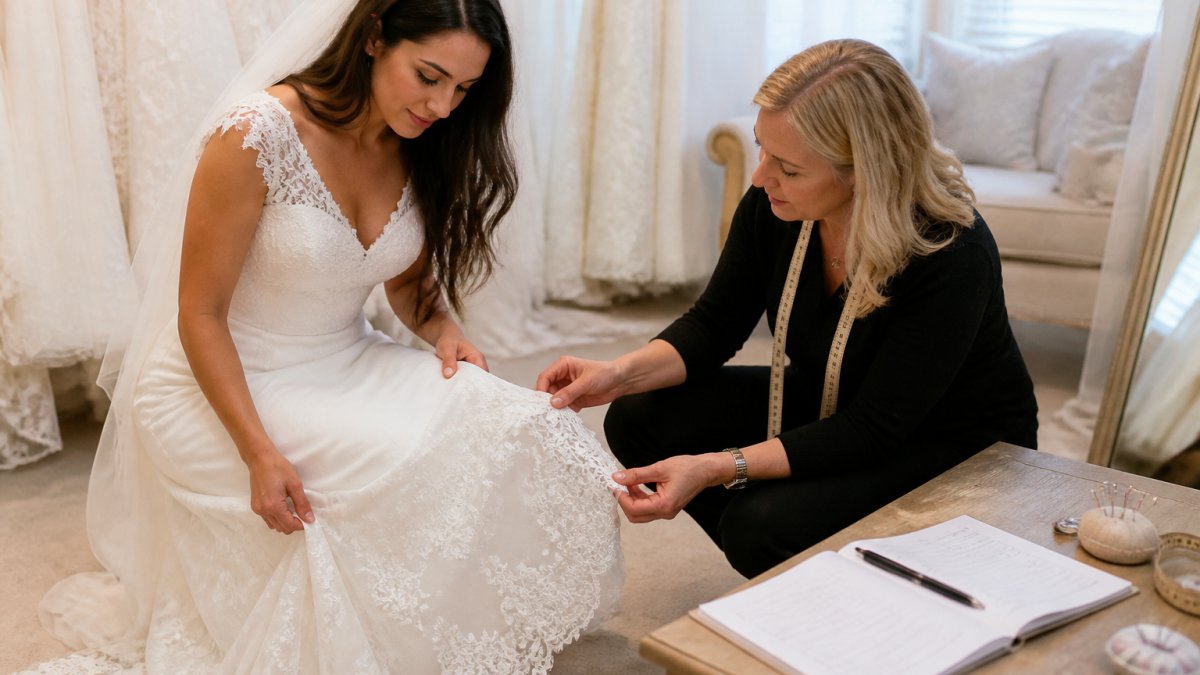
Second-hand wedding dresses can offer real savings, but condition matters more than price. Inspect in person, in daylight, and never buy unseen. The practical question is not whether the dress is cheap, it is whether the discounted price plus the cost of repairs and alterations still beats a new gown that fits.
Condition Checklist
Use this checklist in daylight, with the dress inside out where possible:
- Check underarms for staining and deodorant marks
- Look at the hem for dirt, wear and fraying
- Pull gently on seams and beading to test for loose threads
- Check the zip runs smoothly from top to bottom
- Ask about previous alterations and whether they were reversed
- Confirm the fabric matches the label and the description
- Try it on with the shoes you plan to wear
- Photograph any faults before you agree a price
Fit Reality for Pre-Owned Dresses
Pre-owned dresses may already be altered. A dress taken in for one bride may not suit another body type, and letting out a seam is not always possible, many gowns have limited seam allowance. Sizing labels vary between designers, so measure rather than trust the tag. Bring your measurements and compare them with the dress as it currently sits, not with the label.
Ask specifically:
- Has the dress been taken in or let out, and by how much?
- Is there enough seam allowance to alter it again?
- Has it been cleaned, and by whom?
- Are there any repairs already carried out?
Weighing the Discount Against Repair Costs
A discounted price is only a saving if the dress can be made wearable within your all-in ceiling. Before you buy, get quotes for:
- Cleaning, especially for silk, lace or beaded fabrics
- Repairs to beading, lace or seams
- Alterations to fit you, including a hem and any bustle work
- Replacement of missing buttons, hooks or covered fastenings
If the discount plus those quotes is close to the price of a new gown that fits, the second-hand route is not saving you money. Walk away.
Return Terms and Payment
Private sellers usually offer no returns, so inspect before paying and get any faults written on the receipt. Resale platforms and charity shops may have their own return windows, read them before you commit. Pay in a way that leaves a record, and avoid paying a deposit on a dress you have not tried on.
The most common second-hand mistake is buying unseen because the price looks good. A dress that needs extensive repair can cost more than a new gown bought off the rack.
When Second-Hand Works Best
Second-hand suits brides who are flexible on style, close to standard sample sizes, and willing to budget for cleaning and alterations. It suits less well if you need a specific silhouette quickly, if the dress has already been altered beyond your measurements, or if the fabric is delicate and the cleaning quote is uncertain.
Ways to Save: Off-the-Rack, Simpler Styles and Renting
Off-the-rack dresses are bought as seen and taken home quickly, which cuts both waiting time and rush fees. Simpler designs cost less to alter, and renting suits brides who want a designer gown for one day.
- Off the rack: buy the sample or stock dress, alter to fit
- Simpler silhouettes: A-line and sheath styles need less structure
- Fewer embellishments: less beading means lower alteration bills
- Renting: a good option if you love a designer gown but not the price
- Family heirloom: restyling an inherited dress can save on fabric
Renting carries risk: limited fitting time and strict return rules. Read the agreement before you pay.
Your Wedding Dress Shopping Timeline and Checklist
A practical timeline keeps the pressure off. Most boutiques need several months between order and collection, so start early.
| Stage | Timing | Action |
|---|---|---|
| Set budget | 12 months before | Agree your ceiling |
| First appointments | 9-12 months before | Try silhouettes |
| Order dress | 8-9 months before | Confirm delivery date |
| First fitting | 6-8 weeks before | Alterations begin |
| Final fitting | 2-4 weeks before | Collect the gown |
The single most useful habit is booking appointments early and asking each boutique for its delivery and alteration timeline in writing.
Conclusion
The hardest part of choosing a wedding dress on a budget is holding your line when a gown you love sits just above it. A clear ceiling, an honest alteration estimate and a written timeline solve most of that worry.
At Sofi Designs, we offer one-to-one, appointment-only consultations, inclusive sizing and expert fitting support in a relaxed boutique. Our team has guided brides since 2000, and we will tell you honestly what fits your budget.
Book your appointment today and start with your figure, not ours.
Frequently Asked Questions
How do I set a realistic wedding dress budget?
Start from your overall wedding budget and ring-fence roughly 10% for the dress, then add a separate allowance for alterations, a veil, shoes and underwear. Work out your absolute ceiling before you try anything on, and tell your consultant at the first appointment. A boutique that offers one-to-one appointments can show you options within that figure without wasting your time. Remember that the gown price is only part of the wedding dress budget; the extras usually add several hundred pounds on top.
Are sample wedding dresses cheaper?
Yes, sample wedding dresses are usually reduced because they have been tried on in the boutique and may be from a previous season. The saving can be significant, but budget for cleaning and alterations, since a sample has been handled by many brides and may need taking in or letting out. Always inspect seams, underarms and the hem before committing, and ask how the sample has been stored. A good boutique will be honest about any marks or repairs needed.
How much should I budget for wedding dress alterations cost?
Wedding dress alterations cost varies with the fabric, the number of fitting sessions and how much needs changing. A simple hem and strap adjustment costs far less than rebuilding a bodice or adding a corset back. Ask for an alterations estimate in writing before you buy, and confirm whether the boutique handles fittings in-house. Prices depend on the work required, so request a quote rather than relying on a general figure. Leaving a contingency of a few hundred pounds is sensible.
Can I negotiate the price of a wedding dress?
Politely asking is always reasonable, especially on sample or off-the-rack gowns where the boutique wants to move stock. Ask whether there is any flexibility, whether a veil or alterations could be included, or whether paying in full upfront earns a discount. Get any agreed price, deposit terms and return policy confirmed in writing before you pay, so there are no surprises later.
