Quick Summary
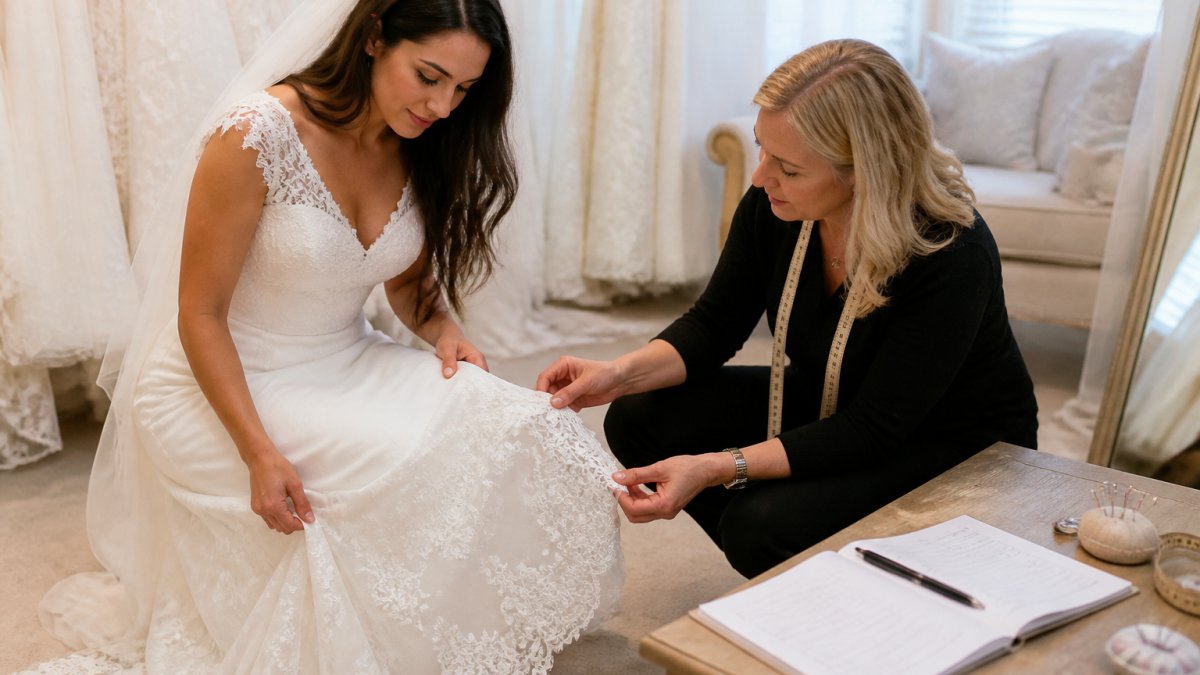
Custom wedding dress alteration is worth it when it solves a real fit problem, such as hem length, bodice comfort or waist shape, on a dress you already love. It is rarely worth it when the changes would redesign the gown, and a custom-made dress may serve better in that case.
- Alterations adjust the existing garment to follow your shape, not to change its design.
- Ask for an itemised written quote and confirm which fittings and pressing steps are included.
- Check the seam allowance before buying, since it limits how far a dress can be let out.
- Delicate lace, beading and silk are harder to alter invisibly and cost more to work on.
- Compare the alteration quote with a custom gown’s price before deciding which route to take.
Table of Contents
- Why Wedding Dress Alterations Matter for Fit and Comfort
- Wedding Dress Alterations Cost: Itemised Price Ranges and Budgeting
- Common Alteration Types: Hems, Bodices, Waists and Straps
- Wedding Dress Alteration Timeline: Fittings, Lead Times and Contingency Planning
- Wedding Dress Alterations Before and After: What Changes and What Doesn’t
- Alterations Versus a Custom-Made Gown: A Cost-Versus-Benefit Comparison
- A Decision Framework: When Alterations Are Worth It and When They Are Not
- Frequently Asked Questions
Last Updated: November 4, 2026
Is custom wedding dress alteration worth it? For most brides, the answer depends on how far the dress needs to move from its original fit. The honest answer is that alterations are worth paying for when they solve a real fit problem, and rarely worth it when they are chasing a different silhouette entirely.
This guide walks through the decision step by step. We cover what alterations actually fix, what they generally involve, how long the process takes, and when a custom-made gown may serve you better.
Why Wedding Dress Alterations Matter for Fit and Comfort
A wedding dress is rarely made to your exact measurements. Most gowns are cut to a standard size chart, so even a dress that looks right on the rail can sit wrong on your body. Read these practical alteration tips on what to get done and common mistakes to avoid.
Alterations adjust the existing garment so it follows your shape. The goal is comfort, balance and a clean line down the aisle, not a new design.
- Length: hems that drag or sit too high
- Bodice: cups, straps and bust support
- Waist: a smooth line that sits where it should
- Back closure: fastenings that lie flat
Well-fitted dresses also move better. A gown that is cut too tight at the bodice can restrict breathing and make sitting down awkward, which is hard to notice in a shop but very noticeable after a long day.
Wedding Dress Alterations Cost: Itemised Price Ranges and Budgeting
Pricing depends on the dress, the work involved and the specialist you use, so no single figure applies to every gown. Ask any bridal seamstress for an itemised quote before you commit, and check Sofi Designs’s website for current prices or to request a quote. Find affordable designer wedding dress options before you decide how much to spend on alterations.
What most brides actually need is a working budget built from an itemised written quote. Confirm exactly which fittings, pressing and finishing steps are included before comparing quotes, and keep a contingency for unexpected work, such as a seam that needs reinforcing once the dress is on your body.
Factors That Affect Alteration Pricing
Several things change the final bill:
- Fabric and lining: delicate lace, silk and multiple layers can take longer to handle.
- Construction: boned bodices, corsetry and beading add time.
- Size change: taking in a dress by a small amount costs less than a large change.
- Number of fittings: each extra fitting adds time and cost.
- Rush work: short deadlines can mean an additional charge, so ask about this when you request a quote.
- Pressing and finishing: a full gown press and final steam may be charged separately, so confirm this in your quote.
Common Alteration Types: Hems, Bodices, Waists and Straps
Most brides need one or two of these changes. Knowing which applies to you helps you judge whether the work is worth the cost.
Hems and length
Hemming is the most common alteration. A dress that is too long can catch on shoes, while one that is too short can look unbalanced in photos.
Bodices and bust
Bodice work often matters most for comfort. Adjusting the cups or the bust seam can make a real difference to how comfortable the dress feels through the day.
Waists
Taking in or letting out the waist changes the whole silhouette. Small changes are usually straightforward, but a large change can affect the balance of the skirt.
Straps and sleeves
Straps are often the quickest fix, and replacing them can change the look of the dress entirely.
The four most common alterations, and what each one usually changes, are summarised below.
| Alteration | Typical purpose | Note |
|---|---|---|
| Hems and length | Stop dragging or fix a too-short look | Confirm shoe height first |
| Bodices and bust | Improve comfort and support | Often matters most for comfort |
| Waists | Create a smooth line | Large changes affect skirt balance |
| Straps and sleeves | Quickest visible fix | Can change the look entirely |
Wedding Dress Alteration Timeline: Fittings, Lead Times and Contingency Planning
Alterations are commonly carried out over several fittings, so confirm the number of fittings your seamstress expects when you agree the work.
Plan backwards from your wedding date, allowing time between fittings and room for a second round of changes if the dress needs them. Book a wedding dress fitting in Basingstoke to arrange your appointments nearby.
Shoes matter too. Bring the shoes you plan to wear, because heel height changes the correct hem length.
Wedding Dress Alterations Before and After: What Changes and What Doesn’t
Alterations adjust fit, not the design. See what a private bridal appointment involves if you want to understand how the process works from start to finish. The neckline, lace pattern and overall silhouette usually stay the same. Adding sleeves, changing the neckline shape or reshaping the skirt is a much bigger job, and at that point you are closer to a redesign.

Before alterations, a dress may look slightly loose at the waist or pool at the floor. After alterations, the same dress should sit cleanly and move freely, with the design still recognisable.
Alterations Versus a Custom-Made Gown: A Cost-Versus-Benefit Comparison
Alterations can be good value when:
- You already love the dress and only need fit changes.
- The dress is a good match for your body shape with small adjustments.
- Your budget is fixed and you want to keep costs predictable.
A custom-made gown may be worth considering when:
- You want a specific design that no ready-made dress offers.
- The dress you love needs major structural changes.
- You have time for multiple fittings and a longer lead time.
Custom gowns are cut to your measurements from the start, while heavy alteration work can add up quickly. Book a designer wedding dress consultation to get a quote for a custom gown. Compare the total of your alteration quote with the price of a custom option before deciding.
A Decision Framework: When Alterations Are Worth It and When They Are Not
Use these questions to decide, working through them in order. The first three are about the dress itself; the last two are about money and time.
- Does the dress fit well in the bust, shoulders and back? These areas are the hardest and most expensive to change because the structure sits there. If the shoulders gape or the bust sits wrong, alterations may not fix it without rebuilding the bodice.
- How much seam allowance is there? A dress can only be let out as far as the fabric folded inside the seam allows. Ready-to-wear gowns often carry limited seam allowance, which can restrict how far a dress can be let out. Ask your seamstress to check the allowance before you buy.
- What is the fabric and embellishment? Delicate lace, beaded panels and silk crepe are harder to alter invisibly than plain mikado or crepe. Beading must be removed and re-sewn around any seam, which adds cost and risk. Fragile or heavily embellished fabric is a warning sign for large changes.
- Is the size difference small or large? Taking in or letting out by one size is routine. Moving two or more sizes usually changes the balance of the skirt and the position of the waist, and the quote climbs quickly.
- Does the itemised quote, plus contingency, still make sense against the alternatives? Compare the total with the cost of a custom gown or a better-fitting ready-to-wear dress. If the alteration quote approaches the cost of a custom gown, the custom route deserves serious thought.
Alterations are usually worth it when the dress already suits your shape and the work is limited to hem, waist, straps and a bustle. They are usually not worth it when the dress needs major structural work, when the fabric is fragile, when there is no seam allowance to let out, or when the quote approaches the cost of a custom gown. In those cases, a better-fitting alternative or a resale of the original gown may give you a stronger result for the money.
A practical way to test the decision is to ask for a written quote that separates essential fit work from optional design changes. If the essential work is modest and the optional work is what is pushing the price up, you can usually proceed with the essentials and leave the rest. If the essential work alone is heavy, that is the signal to reconsider the dress.
If you are weighing these options, our team at Sofi Designs is happy to talk through your dress, your budget and your timeline. Book your appointment today to get personal guidance.
Frequently Asked Questions
Are wedding dress alterations worth the cost?
For most gowns, yes, particularly when the fit is significantly off. A well-fitted dress sits correctly across the bust, waist and hips, moves comfortably and photographs better than one that gaps or pools. So the question is whether your gown needs work that changes how it looks and feels on the day. Simple hem changes are often good value, while extensive restructuring on a delicate gown may cost more than it adds. Ask a bridal specialist for an itemised quote before you decide, and compare it against the cost of a dress that fits off the rack.
How long do wedding dress alterations take?
Most alteration work is spread across several fittings over a period of months, and the schedule depends on how much work the gown needs and how busy the seamstress is. Book your first appointment soon after you buy the dress and aim to finish at least six to eight weeks before the wedding, leaving room for a final fitting and any corrections. Rush work is often available but may carry an extra fee, so confirm lead times and fitting counts in writing when you get your quote. Contact Sofi Designs for guidance on timing for your dress.
Can every wedding dress be altered?
Most gowns can be altered, but some construction makes changes difficult or uneconomic. Heavily beaded or embroidered fabric, delicate lace, very structured boning and fabrics that mark easily can limit what a tailor can safely do. Ask whether the work will affect the dress integrity and the appearance of any embellishments before you agree. If the fit issues are substantial, a seamstress may recommend a different approach, so an honest assessment at the first fitting is worth having.
Which wedding dress alterations are worth paying for?
Changes that improve fit and comfort usually justify their cost. These include taking in the waist or bodice, adjusting the bust, correcting strap length and fixing the hem so the dress sits at the right height for your shoes. Cosmetic changes such as adding custom details or reworking the silhouette cost more and are a matter of personal preference. Prioritise fit over decoration, and where your budget is limited, spend first on the alterations that affect how the dress sits on your body.
Sofi Designs is an established independent boutique in Basingstoke, helping brides and their families since 2000. Book your appointment today for one-to-one guidance on your wedding dress, alterations and fittings.