Table of Contents
- The Real Question: Is Traveling for a Wedding Dress Worth It?
- The Wedding Dress Shopping Timeline: When to Start Planning
- What to Bring to a Wedding Dress Appointment
- How to Transport a Wedding Dress on a Plane
- Shipping vs. Flying: Which Is Better for Your Dress?
- Insurance, Customs, and Post-Travel Restoration
- Conclusion: Making the Decision That’s Right for You
- Frequently Asked Questions
Last Updated: October 2, 2026
The Real Question: Is Traveling for a Wedding Dress Worth It?
For most brides, wedding dress travel is worth it when the journey unlocks a fit, a fabric, or one-to-one service your local options cannot match. At Sofi Designs, brides who travel to our Basingstoke boutique come for one reason: they have not found their dress closer to home.
Travel is worth it when the destination offers something your local market cannot: a specific designer, inclusive sizing, or unhurried one-to-one appointments. If it offers only the same rails you have already seen, save the journey.
The Wedding Dress Shopping Timeline: When to Start Planning
Twelve months before the wedding is the standard starting point, and travel adds four to six weeks of buffer either side. That matters because a designer dress is made to order, not pulled from a shelf.
- 12 months out: Research boutiques, check designer stocklists, and book appointments. If you are travelling, book two boutiques in the same trip to justify the journey.
- 10 to 11 months out: Attend appointments and make your choice. Allow a second visit if you are deciding between two gowns.
- 8 to 9 months out: Place the order. Made-to-order gowns typically need several months in production before they reach the boutique.
- 6 to 8 weeks out: First fitting. This is where alterations begin.
- 2 to 4 weeks out: Final fitting and collection. If you travelled to buy, this is when you plan the journey home.
Booking a travel appointment later than eight months before the wedding leaves almost no room for production delays or a second fitting. If your date is fixed and immovable, start the search earlier, not later.
What to Bring to a Wedding Dress Appointment
Bring the right things to a wedding dress appointment and you will decide in one visit rather than three. The essentials are simple and inexpensive.
- The right underwear. A strapless, seam-free bra and neutral underwear give you a realistic silhouette under the gown.
- Shoes of the height you plan to wear. Heel height changes hem length and posture. Bring the actual pair or one at the same height.
- Photos of the venue. A dress that suits a candlelit manor may look wrong in a bright coastal setting.
- Inspiration images, not a fixed shortlist. Bring three or four images of shapes you like; a rigid list of one gown closes off better options.
- One trusted second opinion. Two guests is manageable; five turns an appointment into a committee meeting.
- Hair clips or a hairband. You will want to see how a neckline reads with your hair up.
How to Transport a Wedding Dress on a Plane
A wedding dress can travel as hand luggage on most airlines, but rules vary by carrier and crew discretion, so check your airline’s cabin baggage policy before you fly. The safest method is a soft garment bag carried flat and placed in the overhead bin once boarding begins.
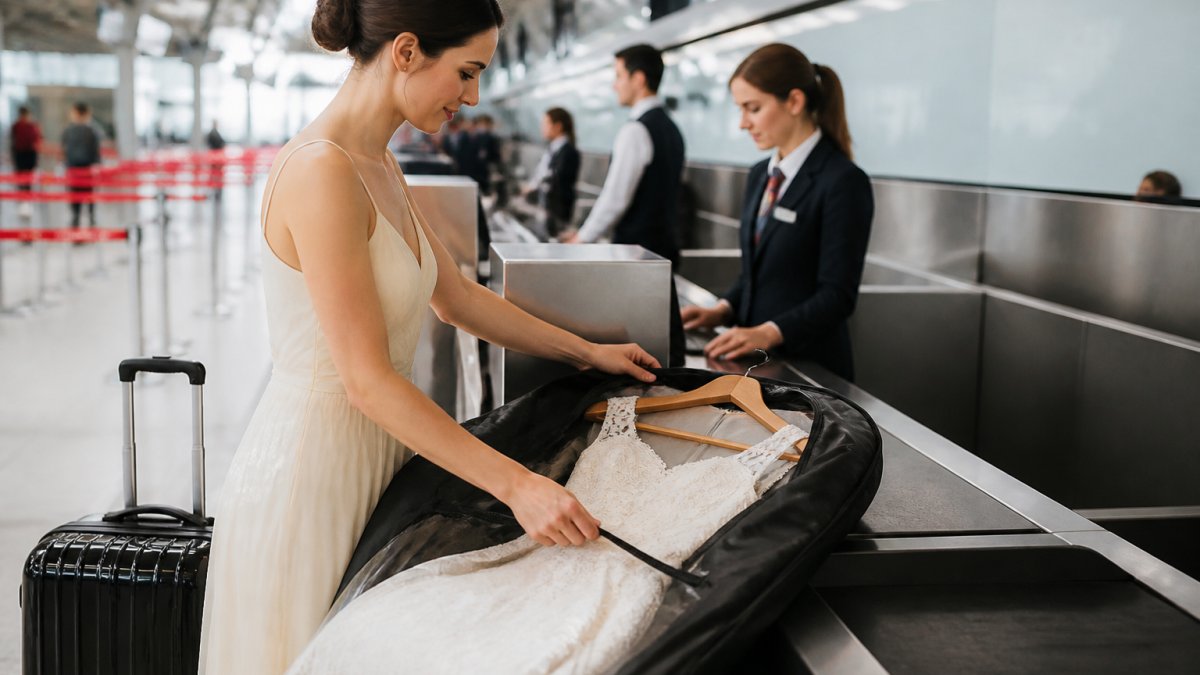
The practical steps that work:
- Ask the airline in advance. Most carriers allow a garment bag as your cabin allowance, but some count it as an extra item. Get the answer in writing.
- Use a breathable garment bag, not plastic, which traps moisture and creases fabric.
- Fold the gown along its seams, not across the middle, and roll tissue paper into the bodice to hold its shape.
- Board early if you can. Priority boarding gives you first access to overhead space; otherwise speak to gate staff before boarding.
- Talk to the flight attendant once seated. A quiet word often earns hanging space in the crew closet, particularly on long-haul flights.
- Never check the gown. A lost or crushed wedding dress is not a risk worth taking.
Photograph the gown, inside and out, before you pack it. If an airline damages it, that timestamped record is what supports a claim. Most brides never think to do this until it is too late.
Shipping vs. Flying: Which Is Better for Your Dress?
Shipping a wedding dress beats flying when the gown is already fitted, well insured, and you are not travelling yourself. Flying wins when you want eyes on the dress at every stage and are making the journey anyway. The cost comparison most brides skip is what usually settles it.
Here is how the two compare in practice:
| Factor | Flying with the gown | Shipping the gown |
|---|---|---|
| Control | You keep the dress in sight | Handled by a courier network |
| Cost | Counts toward cabin allowance or an extra bag fee | Separate shipping fee plus declared-value cover |
| Risk | Overhead bin damage, crew discretion, gate-checking | Loss, transit damage, customs hold |
| Best for | Brides travelling to the venue | Dresses sent ahead to a trusted contact |
| Insurance | Airline liability limits apply (often capped per kilogram) | Requires declared value cover from the courier |
| Timing | Immediate, in your hands | Add 3-10 working days for domestic, longer for international |
The cost-benefit question most brides skip
Run the numbers. On a typical long-haul route, an extra checked bag can run £60-£120 each way, while a specialist courier moving a boxed gown domestically with declared-value cover often lands in a similar range. The courier does not require you at the airport, does not count against your cabin allowance, and does not put the gown through a conveyor belt.
Customs and duty when shipping internationally
When you ship a wedding dress across a border, the receiving country’s customs authority treats it as an imported good, not personal effects, because you are not carrying it yourself. The recipient may be asked to pay import VAT and duty on the declared value, and the parcel can be held until that is settled.
When flying still wins
Flying wins when the gown is unfinished, alterations are pending, or the wedding is days away, and when the destination’s customs rules for shipped personal goods are unclear or punitive. Carry the gown as cabin baggage, keep the receipts, and be ready to explain at customs that it is your own dress for your own wedding.
If you ship, photograph the gown inside and out before it leaves, keep the courier’s tracking number and declared-value receipt, and tell your recipient to inspect the box before signing. A signed-for delivery without inspection weakens any damage claim.
Insurance, Customs, and Post-Travel Restoration
This is where most guides stop at vague warnings. Here is what actually applies, and what to do at each stage.
Insurance: what covers a wedding dress in transit
Travel insurance rarely covers wedding attire as standard, and even when it does, the single-item limit is often far below a designer gown’s value. Check your policy’s single-item cap. A specialist wedding insurance policy, or a named-item addition to your contents cover, is the usual route; you will typically need a receipt or valuation, so keep the purchase paperwork.
Customs: what to declare and what to expect
For international travel, customs and duty rules apply to goods you are carrying. A wedding dress you own and are transporting for your own use is generally treated as personal effects, but the rules differ by destination and by value. UK government guidance on taking goods abroad sets out what you need to declare, and the destination country’s own customs authority will have its own thresholds.
Post-travel restoration: the step almost everyone misses
Once the wedding is over, post-travel restoration matters more than most brides realise. A gown folded in a garment bag, worn through a full day, and flown home carries creases and marks that set over time. Professional cleaning and preservation within a few weeks protects the fabric and beading; leaving it in the bag for a year is the most common mistake, and often irreversible.
Do not store a worn gown in a plastic garment bag. Plastic traps moisture and can cause yellowing and mildew over time. Use a breathable cotton or acid-free bag, and have the gown cleaned before storage, not after.
A simple post-travel checklist
- Within 48 hours of returning: unpack the gown, hang it in a breathable bag, and inspect for marks or pulls.
- Within two to four weeks: book professional cleaning and preservation with a wedding dress specialist.
- Before storage: confirm the gown is boxed with acid-free tissue and kept in a cool, dry place away from direct light.
- Keep the receipt: if you ever insure or resell the gown, the cleaning and preservation record supports its value.
Conclusion: Making the Decision That’s Right for You
The honest answer to whether it is worth traveling for wedding dress shopping is that it depends on what you cannot find at home. If your local boutiques stock the designers you love, offer inclusive sizing, and give unhurried appointments, stay local. If not, the journey pays for itself in a dress that actually fits.
Frequently Asked Questions
What is the best way to travel with my wedding dress?
The safest method is to carry your dress as hand luggage in a breathable garment bag. Most airlines allow this as an additional item, but always check your specific carrier’s policy in advance. If the dress is too bulky for the overhead bin, ask a flight attendant about hanging it in the crew closet. For international travel, keep the dress with you to avoid lost luggage and customs delays. Shipping ahead to your destination venue is another option, but factor in insurance and tracking costs.
How many appointments should I book when traveling for a dress?
Aim for two to three appointments across a single day or weekend. This gives you enough time to try on a range of styles without feeling rushed. Book your first appointment in the morning when you’re fresh, and leave the afternoon for follow-ups or a second boutique. If you’re traveling far, call ahead to confirm the boutique has your size range and the styles you’re interested in. A relaxed timeline helps you make a confident decision.
Do I need to factor in extra costs for alterations when buying away from home?
Yes. Alterations are almost always needed, even on designer gowns. If you buy from a boutique away from home, you’ll likely need to find a local seamstress for fittings, which can add to your budget. Ask the boutique if they offer virtual fitting guidance or can recommend someone in your area. Some brides schedule a final fitting at the original boutique, but that means extra travel. Always ask about alteration costs and turnaround times before you commit.
Is it hard to fly with a wedding dress?
It’s manageable with preparation. Use a sturdy garment bag, check the airline’s carry-on rules, and arrive early to secure overhead bin space. If the dress is too large, you may need to buy an extra seat or check it in a hard-shell case, but that risks damage. Many brides fly with their dress as a personal item. For international flights, have your customs declaration ready and consider travel insurance that covers wedding attire. Steam the dress at your destination to remove wrinkles.