Table of Contents
- How to Book Your Designer Wedding Dress Consultation
- What to Bring to a Wedding Dress Appointment
- What to Expect at Your Bridal Appointment
- How Long Is a Bridal Appointment
- Wedding Dress Shopping Tips for Your Consultation
- Preparing for Your Appointment: Timeline and Decisions
- Why Choose Sofi Designs for Your Bridal Consultation
- Frequently Asked Questions
Last Updated: October 11, 2026
How to Book Your Designer Wedding Dress Consultation
Your first step toward finding a gown that feels uniquely yours is to book designer wedding dress consultation with us, an experience designed to make you feel confident and beautiful on your wedding day.
To book designer wedding dress consultation appointments with us, contact the boutique directly through our website or phone. We operate on an appointment-only basis, providing dedicated one-to-one attention from expert stylists so your vision receives full focus.
Understanding Consultation Costs and Policies
Ask about payment terms and cancellation policy for appointments. Knowing these details upfront prevents misunderstandings.
Lead Times and Ordering Deadlines
Most designer dresses require a significant lead time from order to delivery, plus time for alterations. Book your consultation well in advance of your wedding. If sooner, ask about rush options.
When booking, ask: “What is your current lead time?” and “If I order today, when would my dress arrive?” If your wedding is fewer than 12 weeks away, ask about sample sizes or cancelled orders available for immediate collection.
Clarify the alteration timeline. Confirm the boutique can prioritise your alterations if your wedding is close.
Questions to Ask When Booking
When booking, ask: number of dresses you can try; guest policy; current lead time; rush ordering options; cancellation policy; stylist continuity; and whether they offer made-to-measure or ready-made collections.
Booking Timing and Availability
Most boutiques book well in advance, especially during peak season. Book early if your wedding falls then.
Mention designer preferences or style requirements when booking so the boutique can curate a selection and confirm they carry your preferred labels.
Book your consultation during a time when you feel relaxed and unhurried. Avoid scheduling appointments when you’re stressed about work or other commitments, your mindset affects how you experience trying on dresses.
What to Bring to a Wedding Dress Appointment
Bring undergarments similar to what you’ll wear on your wedding day, a strapless bra, slip, or camisole for comfort and hygiene.
Wear shoes with your intended wedding heel height, or bring multiple options to see the effect each creates.
Bring inspiration photos showing styles, silhouettes, and details you love. These help stylists understand your preferences and narrow the collection.
Bring 1-2 trusted companions for emotional support and perspective, but keep the group small to avoid feeling overwhelmed.
| Item | Why It Matters | Notes |
|---|---|---|
| Appropriate undergarments | Ensures accurate fit and comfort | Match your wedding day choice |
| Wedding-height heels | Shows true silhouette and movement | Bring multiple heights if undecided |
| Inspiration photos | Communicates your style vision | Digital or printed both work |
| Small trusted group | Provides support and perspective | 1-2 companions is ideal |
| Notepad or phone | Records designer names and details | Helps you remember your choices |
Avoid wearing complicated clothing that’s difficult to remove and put back on. Tight jeans or layered outfits slow down the try-on process and make changing between dresses frustrating rather than enjoyable.
What to Expect at Your Bridal Appointment
Your first consultation experience with Sofi Designs begins the moment you arrive. Our team welcomes you into a relaxed, welcoming environment designed to make you feel comfortable and supported. We’ll start by having a conversation about your wedding vision, your personal style, and what you’re hoping to find.
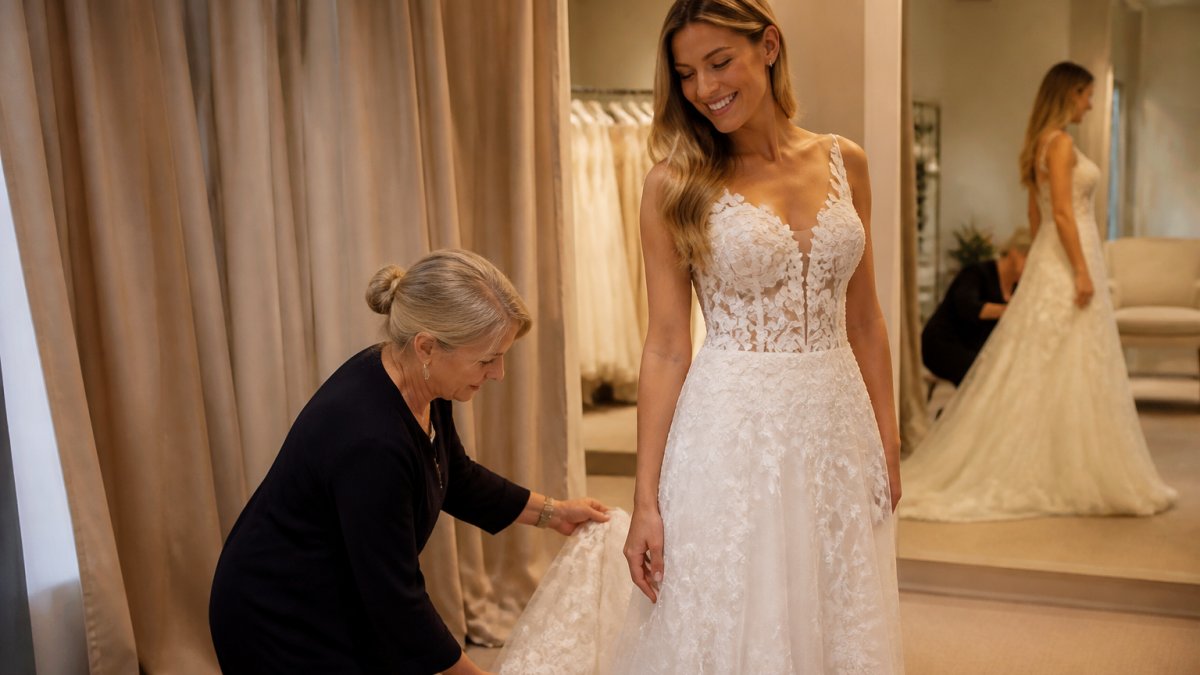
Our stylists will then present a carefully curated selection of dresses tailored to your preferences, body type, and wedding style. You’ll try on multiple gowns, and we’ll provide honest feedback about how each one looks and feels on you. This isn’t about pressure, it’s about helping you discover which dresses genuinely suit you and make you feel like yourself.
Your First Consultation Experience
Expect to spend 1-2 hours trying on dresses. We’ll discuss your wedding date, venue, and celebration tone to recommend appropriate styles. You’ll move around in each dress to assess comfort and fabric movement, and we’ll discuss fit, alterations, and customisation options.
Working With Your Bridal Stylist
Your bridal stylist understands designer collections, fit, alterations, and timelines. Good stylists ask thoughtful questions about how you want to feel, your comfort with embellishment, and your style preferences to guide you toward dresses you’ll genuinely love.
The right bridal stylist makes you feel heard and supported, never pressured. If an appointment feels rushed or dismissive of your preferences, that’s a sign the boutique isn’t the right fit for you.
How Long Is a Bridal Appointment
A typical appointment lasts 1-2 hours; first consultations are often longer due to discovery work. Don’t rush, trying on dresses should feel unhurried and enjoyable.
Wedding Dress Shopping Tips for Your Consultation
Approach with an open mind, you may discover a different silhouette feels amazing on you. Trust your comfort instincts, not just photos. Ask about construction, fabric weight, and movement. Discuss realistic timelines for ordering, alterations, and fittings. Be honest about your budget; a good boutique works within your parameters and finds the best value without pressure.
Preparing for Your Appointment: Timeline and Decisions
Plan your consultation well before your wedding to explore options, order, and complete alterations without rush. If sooner, expedited ordering is available but may limit choices and customisation.
Pre-Appointment Preparation Checklist
Use this checklist before your appointment:
Wedding Details: Confirm date and venue type; decide formality level, season, time of day, and overall aesthetic; identify guest dress code.
Your Body and Fit: Get measurements (bust, waist, hips, shoulder-to-floor length); note weight changes; identify dress size and fit preferences; consider mobility or comfort needs.
Budget and Customisation: Set dress budget; decide on made-to-measure (£1,500-£4,000+) or ready-made (£800-£2,500); plan alteration budget (£200-£800); identify non-negotiable features.
Style and Inspiration: Create mood board with 15-25 dress images; note recurring themes (silhouettes, necklines, sleeves, embellishment); collect 5 loved and 5 disliked dresses; save venue and styling inspiration; note preferred designers.
Practical Considerations: Decide who attends (1-2 companions); plan undergarments and shoes; block 2-3 hours; arrange transport.
Clarifying Your Style Vision
Before your appointment, spend time reflecting on what you actually want, not what you think you should want. Ask yourself:
- How do you want to feel? Powerful, romantic, elegant, playful, ethereal, bold? Your emotional response to a dress matters as much as how it looks.
- What’s your comfort level with attention? Do you want to blend in or stand out? This influences embellishment, colour, and silhouette choices.
- What’s your lifestyle like? If you’re athletic and casual, a heavily structured ballgown might feel uncomfortable. If you love glamour, a simple slip dress might feel underwhelming.
- Are there any sentimental or cultural elements? Do you want to honour family traditions, incorporate heirloom details, or reflect your heritage? Discuss this with your stylist early.
- What’s your relationship with trends? Are you drawn to current bridal trends, or do you prefer timeless styles you’ll love in 10 years?
Your answers guide the conversation with your stylist and help them narrow the selection before you arrive.
Made-to-Measure vs. Ready-Made: Deciding in Advance
Understand the trade-offs before your appointment so you can discuss the right option with your stylist.
Ready-Made Collections offer faster delivery (typically 8-12 weeks), lower cost (often £800-£2,000), and immediate visual feedback, you see exactly what you’re getting. Customisation is usually limited to minor alterations (hemming, taking in seams, adjusting necklines). This is ideal if your wedding is within 4-5 months or you prefer a defined budget.
Made-to-Measure allows full customisation: fabric choice, silhouette adjustments, neckline and sleeve design, embellishment placement, and length. Lead times are longer (12-20 weeks) and costs higher (typically £1,500-£4,000+). This is ideal if you have a very specific vision, need significant fit adjustments, or have time to wait. Discuss whether the designer offers “semi-made-to-measure” (a middle ground with some customisation but faster turnaround).
Mention your preference when booking so the boutique can prepare samples and discuss realistic options.
Setting a Realistic Budget
Before your appointment, decide on a dress budget and stick to it. Quality designer wedding dresses are an investment; there’s no shame in having clear parameters. A good boutique respects your budget and helps you find the best value within that range.
Remember that your total bridal budget includes the dress, alterations, undergarments, shoes, and accessories. If you’re working with a fixed total, allocate your budget across the dress, alterations, shoes, and accessories. Discuss your budget openly with your stylist, they can recommend designers and styles that offer the best value for your investment.
The more prepared you arrive, the more efficiently your stylist can work and the more enjoyable your appointment will be. You’re not locked into any decisions made during preparation, this is simply groundwork to make the consultation productive.
Why Choose Sofi Designs for Your Bridal Consultation
Sofi Designs has been helping brides celebrate their special moments since 2000. Our experience means we understand what works, what flatters, and how to guide you toward a dress that feels authentically you. We’re not here to sell you the most expensive option or push you toward trends that don’t suit you.
Our one-to-one appointment approach means you’ll never feel like one of many brides processed through a busy schedule. You receive dedicated attention from stylists who care about your experience and want you to feel confident and beautiful. We carry a carefully curated collection of designer wedding dresses alongside mother of the bride and groom outfits, so your whole family can look and feel their best.
We’re also committed to inclusive sizing and honest styling advice. Whether you’re a size 8 or 18, petite or tall, we work to find designs that celebrate your body and make you feel wonderful. Our fitting expertise means alterations are handled with precision, ensuring your dress fits perfectly for your big day.
Booking your designer wedding dress consultation is an investment in one of the most important shopping experiences of your life. When you choose Sofi Designs, you’re selecting a boutique with over two decades of experience, a team dedicated to personalised attention, and a genuine commitment to helping you find a dress that makes you feel like the best version of yourself. Get started with your consultation today and discover why brides across Southern England trust us with this cherished moment.
Frequently Asked Questions
How do I book a designer wedding dress consultation?
Contact Sofi Designs to schedule your appointment. You can call, email, or visit the boutique in person to check availability. We recommend booking well in advance of your wedding date to secure your preferred time slot. When you book, share your wedding date and any specific requirements so we can prepare our collection for your visit.
What should I bring to a wedding dress appointment?
Bring undergarments you plan to wear on your wedding day, comfortable shoes with a heel similar to what you’ll wear, and any inspiration photos or mood boards. Consider bringing a trusted friend or family member for support. Bring your wedding date, venue details, and a rough budget if you have one. Leave large bags and valuables at home, and wear minimal jewellery to avoid snagging delicate fabrics.
How long does a bridal appointment usually last?
A typical bridal appointment at Sofi Designs lasts 1.5 to 2 hours. This gives you plenty of time to discuss your vision, try on multiple dresses, receive styling advice, and explore customisation options without feeling rushed. We schedule each appointment individually to ensure you receive dedicated, one-to-one attention from our expert stylists.
What questions should I ask a designer or stylist during my consultation?
Ask about lead times and delivery dates, customisation options for your chosen design, fabric choices and how they affect the final look, alterations services and costs, payment terms and deposit requirements, and care instructions for your dress. Discuss your lifestyle and comfort needs, whether the designer offers rush options if needed, and what happens if adjustments are required after delivery.