Last Updated: October 23, 2026
Quick Summary
When choosing mother of the bride outfits, read the invitation first: it sets the dress code, time of day and venue, which together determine formality, fabric weight and length. Choose a colour that sits beside the wedding palette rather than inside it, and never match the bridesmaids. Prioritise silhouette, fit and comfort over trend.
- Allow four to six months before the wedding for appointments, a decision and at least two fittings.
- The outfit itself usually accounts for roughly 60-70% of total spend, with alterations and accessories making up the rest.
- Book your first alteration appointment once shoes are chosen, because heel height changes the hem.
- Petite frames should look for a defined waist and a hem ending above the ankle or at midi length.
- Test the outfit seated, standing and walking up stairs before you commit.
Table of Contents
- Start With the Wedding, Not the Dress
- Mother of the Bride Outfit Ideas by Dress Style and Silhouette
- Mother of the Bride Outfit Colours That Suit the Wearer
- Getting a Flattering Fit for Every Body Type
- Comfortable Mother of the Bride Outfits for a Long Day
- Mother of the Bride Trouser Suits and Modern Alternatives
- Shopping Timeline, Budget and Alterations
- Shoes, Accessories and Day-of Practicalities
- Frequently Asked Questions
Start With the Wedding, Not the Dress
Most mothers begin with the dress. That is the wrong order. The wedding itself decides what you can wear, and getting that sequence right saves weeks of returns and second-guessing.
The first step in choosing mother of the bride outfits is to read the invitation as a brief. It tells you the dress code, the time of day and the venue, which together set the formality, the fabric weight and the length.
Dress Code, Venue and Season
Formal weddings call for floor-length or elegant midi dresses in crepe, matte satin or lace. A relaxed country celebration suits softer fabrics and less structure. For a winter wedding, look at long sleeves, heavier crepe and a coordinating wrap; for a summer ceremony, chiffon and soft pastels work without feeling heavy. If the invitation says black tie, treat it as a floor-length brief.
Coordinating With the Wedding Party Without Matching
You are part of the family photographs, not the bridal party. Choose a colour that sits beside the palette rather than inside it, and never wear the same shade as the bridesmaids. Ask the bride what she has chosen for her attendants before you shop. One honest question now prevents an awkward photograph later.
Mother of the Bride Outfit Ideas by Dress Style and Silhouette
Silhouette matters more than trend. A shape that skims the body and holds its line through a long ceremony will look better in every photograph than a fashionable cut that needs constant adjustment.
A-Line, Sheath and Midi Options
The A-line dress is the most forgiving and the most popular choice for good reason: it defines the waist and falls away from the hip. A sheath dress in a structured fabric gives a clean, modern line for slimmer frames. The midi dress has become the practical favourite for daytime weddings, offering elegance without the hem management of a maxi dress.
- A-line: best for most body types, especially hips and tummy
- Sheath: simplified, best in crepe or matte satin
- Midi: daytime weddings, garden venues, travel
Mother of the Bride Outfit Colours That Suit the Wearer
Colour should flatter the wearer first and the theme second. Start with your skin tone and personal style, then check the palette against the wedding colours. Soft pastels, muted navy, sage, dusty rose and champagne suit most complexions; stark white and ivory are off-limits.
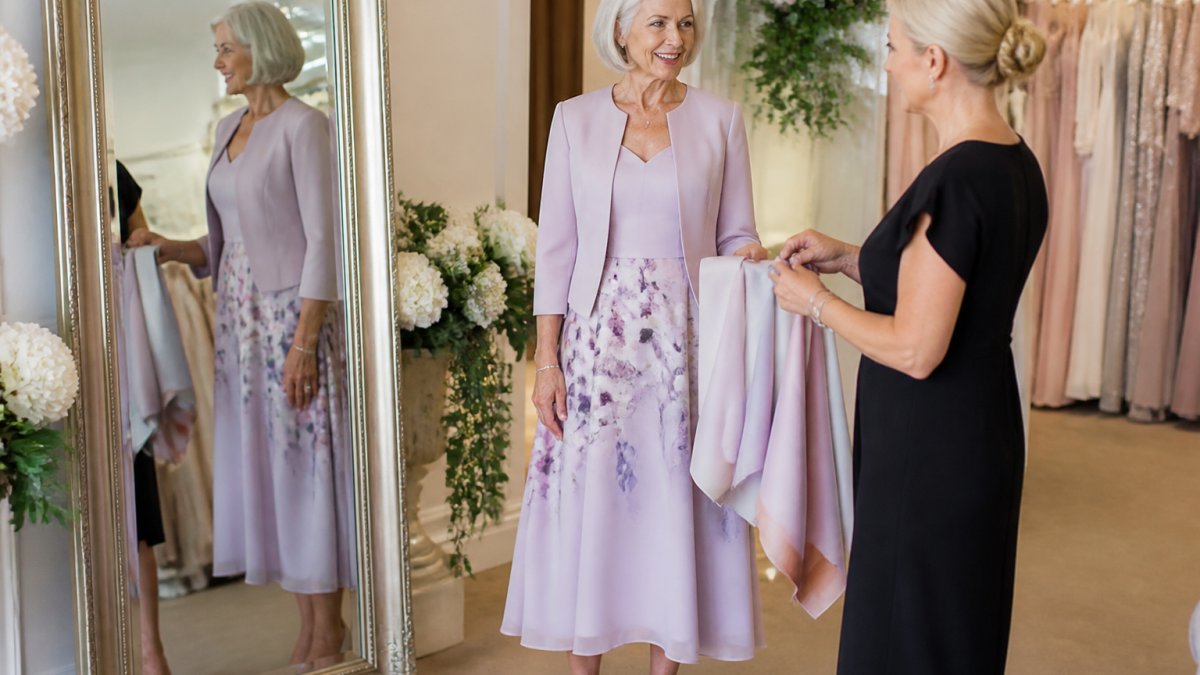
Hold fabric to your face in natural light before deciding. Cool undertones tend to suit jewel tones and soft greys; warm undertones carry champagne, peach and olive well.
Bring a photo of the wedding party’s outfits to your fitting. A stylist can then steer you away from a shade that clashes before you fall in love with it.
Getting a Flattering Fit for Every Body Type
A good fit is not about size on a label. It is about where the seams sit, how the fabric drapes and whether you can move, sit and hug guests without adjusting anything.
For a flattering fit, focus on three points: the shoulder seam should sit on the shoulder bone, the waist should be defined at your natural waist rather than pulled tight, and the hem should clear the floor by a comfortable margin. Sleeves are the most requested alteration, and a well-fitted three-quarter sleeve balances the upper arm while keeping the outfit cool enough for a warm reception.
Specific Fit Guidance for Different Needs
Tall frames: Midi dresses can look like maxis on a tall frame, so check the stated length or ask for extra length.
Plus-size frames: Prioritise structure, a dress with a lined bodice, a defined waist and a fabric with some weight will hold its shape better than a thin, clingy jersey.
Mobility and sensory needs: If you use a wheelchair or have limited mobility, test the outfit seated and check that the fabric does not bunch or pull.
Inclusive sizing matters here: ask before you travel whether the boutique stocks your size in more than one style, so the appointment is not wasted.
Buying a dress that fits standing but pulls when you sit is the most common mistake we see. Always sit down in the fitting room, and try the dress with the underwear and shoes you plan to wear.
Comfortable Mother of the Bride Outfits for a Long Day
Wedding days run long. A ceremony, photographs, a drinks reception, dinner and dancing can mean twelve hours in the same outfit, and comfort is what keeps you looking composed at the end of it.
Look for fabric with a little give, a lining that does not cling, and a neckline you can wear all day without adjusting. Chiffon and soft crepe move well; heavily beaded fabrics look beautiful but add weight. If you are choosing comfortable mother of the bride outfits, prioritise breathable fabric and a secure fastening over dramatic detail.
Mother of the Bride Trouser Suits and Modern Alternatives
A trouser suit is now a confident, elegant choice, particularly for registry office ceremonies, city venues and second weddings. A well-cut jacket in crepe or matte satin, paired with a wide-leg trouser and a silk camisole, reads as formalwear without the constraints of a dress.
Mother of the bride trouser suits work best when the fabric is substantial enough to hold its shape and the jacket is fitted at the shoulder.
Shopping Timeline, Budget and Alterations
Allow four to six months before the wedding. That gives time for a first appointment, a decision, and at least two fittings without pressure. Leave the final fitting until two to four weeks before the day, once shoes are settled.
| Stage | When | What to Do |
|---|---|---|
| Research and booking | 6 months out | Book an appointment, confirm dress code |
| First fitting and decision | 4-5 months out | Try silhouettes, choose colour and fabric |
| Alterations begin | 8-10 weeks out | Hem, sleeves, waist adjustments |
| Final fitting | 2-4 weeks out | Check with shoes and accessories |
| Collection | 1 week out | Press, pack and prepare |
Budget Planning: What to Expect
Set a budget before you shop, covering the outfit, alterations, shoes, bag and accessories. Most mothers find the outfit itself accounts for roughly 60-70% of the total spend, with alterations, shoes and accessories making up the rest. Ask the boutique for a written alteration estimate at your first fitting so there are no surprises.
What Alterations Actually Involve
Alterations are not a sign that the dress fits badly; they are how a good dress becomes yours. The most common adjustments are hemming (especially for midi and maxi lengths), taking in or letting out the waist, shortening sleeves, and adjusting shoulder seams. A well-made dress in a fabric with a little give is easier and cheaper to alter than a heavily beaded or bias-cut piece.
Keep a simple budget sheet with columns for outfit, alterations, shoes, bag, accessories and contingency. Add 10% for the unexpected, it is the most reliable way to stay in control.
At Sofi Designs, we talk through costs openly at the first fitting so nobody feels pressured.
Shoes, Accessories and Day-of Practicalities
Shoes should be comfortable from the first wear, with a heel height you can manage on grass, gravel and stone stairs. A block heel or elegant kitten heel is the practical choice for most venues.
Accessories should finish the outfit, not compete with it. A wrap or cover-up handles cool churches and evening air. Choose a bag large enough for essentials, a fascinator or hat if the dress code calls for one, and jewellery in one metal tone.
The outfit that works is the one you can forget about once you are dressed. Fit, comfort and a colour that suits you will carry the day far better than any trend.
Frequently Asked Questions
Should the mother of the bride wear the same colour as the bridesmaids?
No. Matching the bridesmaids exactly can blur the family roles in photographs and make the mother of the bride look like part of the wedding party. Instead, work within the same colour palette at a different depth: if the bridesmaids wear soft pastels, choose a deeper tone of the same family, or a complementary colour that sits well beside them. Ask the bride what she has chosen before you shop, and take a fabric swatch of the bridesmaid colour with you to appointments so you can judge mother of the bride outfit colours in person rather than from a screen.
How do I avoid looking matronly in mother of the bride outfits?
The details do most of the work. A defined waist, a sleeve that ends at the elbow or wrist rather than the upper arm, and a hem that finishes mid-calf or below the knee all read as modern rather than dated. Avoid heavy embellishment across the whole bodice; pick one focal point, such as a lace sleeve or a beaded shoulder. Structured fabrics like crepe and matte satin hold their shape and look sharper than limp chiffon. A trouser suit is another route entirely, and a well-cut one looks elegant without any of the traditional mother-of-the-bride styling cues.
When should the mother of the bride start looking for an outfit?
Begin around six to nine months before the wedding, once the date, venue and dress code are confirmed. That window leaves room to order a size that needs adjusting, book alterations, and source matching shoes and accessories without rushing. If you are buying a designer piece or need inclusive sizing that may require a special order, start at the earlier end. Leave at least six to eight weeks between the final fitting and the wedding so any alterations can be completed and checked. Shopping three weeks out limits you to what is in stock and forces rushed alterations.
What should the mother of the bride wear if she wants a trouser suit instead of a dress?
Choose a suit in an occasion fabric rather than a business one: crepe, matte satin or a fine wool blend in a deep colour or soft pastel reads as formalwear, while a pinstripe or plain black office suit does not. A wide-leg trouser in a fluid fabric skims rather than clings, and a longerline jacket balances the silhouette. Finish with a silk camisole or a draped top, heeled shoes and a small clutch. Mother of the bride trouser suits work especially well for autumn and winter weddings and for anyone who wants to move freely all day.
What shoes and accessories work best with a mother of the bride outfit?
Match the shoe to the ground you will be standing on. Block heels or a low wedge cope with grass, gravel and cobbles far better than stilettos, and a shoe you can walk in for eight hours matters more than heel height. Choose a bag small enough to carry but large enough for a phone and tissues. A wrap or cover-up in a matching tone covers shoulders in a church and warms you after dark. A fascinator or hat should sit comfortably and be pinned securely, and jewellery should complement rather than compete with the dress.
How do I choose mother of the bride outfit colours that work with my skin tone?
Hold fabrics against your face in natural daylight, not under shop spotlights. Cool undertones usually suit blues, soft pastels, plum and cool greys; warm undertones tend to suit champagne, sage, coral and warm neutrals. If you are unsure, a deeper version of a colour you already wear well is a safe starting point. Avoid pure white and ivory, which belong to the bride, and check the colour in photographs before committing. Taking a friend whose judgement you trust to the appointment helps more than any online colour quiz.
Choosing mother of the bride outfits is easier when you start with the wedding, not the dress, and give yourself a realistic timeline for fittings and alterations. If you want honest, one-to-one guidance in a relaxed boutique, Sofi Designs offers a curated range of designer occasion wear with inclusive sizing, expert fitting support and appointment-only consultations. Book your appointment today and find an outfit you feel confident in from the ceremony to the last dance.

